



In a recent interview with Ms Helen Mashiyat Preoty, Senior Research Associate, CPD, Mr Mahmud Hasan Khan, President, Bangladesh Garments Manufacturers and Exporters Association (BGMEA) & Managing Director, Rising Group, discussed the prospect of renewable energy in the industrial power supply especially in the readymade garments and textile industries. He spoke regarding the opportunities, challenges, and future pathway of energy transition in the industrial sector of Bangladesh.
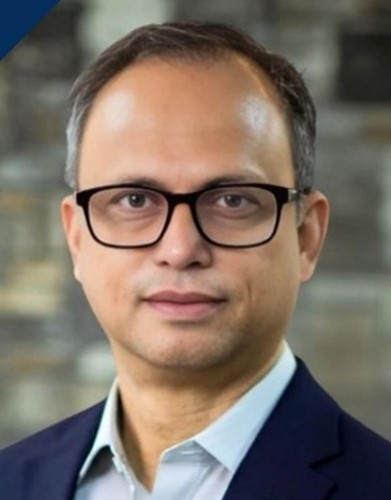
Mr Mahmud Hasan Khan, President, Bangladesh Garments Manufacturers and Exporters Association (BGMEA) & Managing Director, Rising Group
As Bangladesh is moving towards energy transition in 2040, the readymade garments sector will play a significant role in achieving that. Previous manifestos did not set any specific target regarding transitioning towards sectoral transition. Being the newly elected president of the BGMEA, how do you want to see the energy transition in the sector?
Mr. Khan: As the president of the BGMEA, I aspire to motivate all the member factories to opt for renewable or sustainable energy-based power consumption. Especially for the EU suppliers, we will ensure that 30% of the electricity consumption is from renewable sources of electricity by 2030.
Readymade garments now have to meet a certain level of energy consumption from renewable energy sources to sell their goods to the brands and buyers. Does the BGMEA have medium-to long-term plans regarding the renewable energy expansion, especially during your tenure?
Mr. Khan: Right now, the target for the factories that supply EU-based brands and buyers is to consume 30% of electricity from renewable sources. In fact, some of the buyers have shortened the time period from 2030 to 2026. After the discussion, we will determine a target from the BGMEA.
Some of the factories are gradually moving towards renewable energy-based power consumption with their own initiative, and BGMEA, as an association, can help and facilitate their member factories. How does BGMEA plan to promote renewable energy expansion among the member factories of the BGMEA? Are there any incentives or technical support, or facilities offered from the BGMEA’s side?
Mr. Khan: Under the Bangladesh Bank’s Green Transformation Fund, we can take loans at 5% interest rate. In addition to that, if the companies comply with the proper due diligence, we can access low-cost financing from Infrastructure Development Company Limited (IDCOL). We are also trying to negotiate with the Bangladesh Bank to see if they can relax the conditionality of the loan and financing, or refinancing schemes. Another scope that we are advocating for is utilising the newly announced Merchant Power Plant Policy.
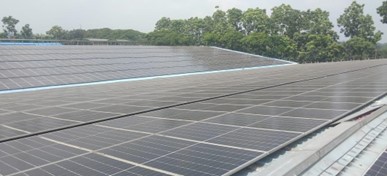 Rooftop solar panel at the factory of Rising Group
Investors always express their concerns regarding opting for solar energy as they usually face several types of challenges while installing solar rooftops, including financing, regulatory, and other constraints. What are the challenges that were faced by the member factories in order to set up the solar PV infrastructure in the factory building?
Mr. Khan: There are three main challenges that are faced in the readymade garment (RMG) factories. First, the RMG factories have a vertical structure, meaning there is not much of a roof area, and for safety reasons, we need to keep some of that particular area vacant. So, we cannot install huge capacity-based solar PVs. Second, the high rate of interest on the loans, financing, and refinancing schemes. Third, the high duty and tariff on the solar PV equipment, except for solar panels and inverters. Other than these two, the tariff rate of mounting structure and other equipment is as high as 60%.
Long before becoming the BGMEA president, you had also installed rooftop solar PVs with a capacity of almost 10 MW in your factories of Rising Group. What drove you to go for solar PVs in the Rising Group spinning factories? And how was your experience so far?
Mr. Khan: In the Rising Group, we have constructed 9.6 MW rooftop solar PVs in the two factories situated in two geographical locations. We started with only 2 MW of solar electricity eight years ago, and we aspire to build solar renewables in all our factories, which will generate 14 MW of electricity from solar. Whenever I visited any factories abroad, especially in China, I always noticed that they have rooftop solar PVs that are functional and operating perfectly. That made me realise that if China can do it, why can’t we.
Additionally, the cost of using solar grid is increasing day by day, and on the other hand, solar electricity is becoming cheaper, given the decreasing cost of electricity generation. Lastly, due to a gas supply shortage, we could not operate our captive power plants, which ultimately hampered production. So clearly, from a business perspective, it is only rational to shift towards solar electricity.
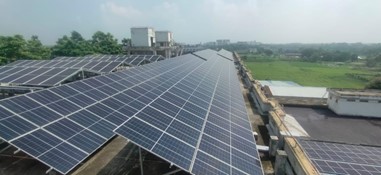 Rooftop solar panel at the factory of Rising Group
There are also doubts and concerns regarding the extent to which factories can utilize renewable electricity, given its nature of variability. Some say that the demands of energy-intensive industries cannot be met by solar-based electricity. From the industrial electricity demand point of view, what percentage share can renewable energy meet? Not only from solar PVs but also from the grid, cost-wise wise is it possible to fully meet the factory operation from renewable energy?
Mr. Khan: Renewable energy can never supply 100% of the total electricity demand of an industry, because it is a variable energy source and cannot supply continuous electricity. Along with renewable energy, the factory must also have a grid electricity connection or captive power. But that does not mean the factories should not install solar PVs, they most definitely should because it will reduce the operational cost or revenue expenditure. Through Net Energy Metering, the factories can even earn an electricity bill offsetting. I believe it is possible; I am doing it. Renewable energy is a business case for the industrial sector. Depending on the location, peak & off-peak, the cost of per unit grid electricity varies from BDT 10-12, whereas per unit electricity from rooftop solar costs around BDT 5-6, at 5% interest rate.
Globally transitioning to renewable energy has been shown to increase employment generation, which is also expected to increase employment at the sectoral level. Did the installation of solar PVs generate additional employment in the Rising factory?
Mr. Khan: Yes, for the regular maintenance, whether the factories are doing it manually or using semi-robotic technology, we need manpower to clean it. Given the dusty condition in the industrial area, the solar panels need to be cleaned every alternative day.
There are different financing and refinancing schemes available for renewable energy financing by the Bangladesh Bank, IDCOL, and commercial banks. For the installation of rooftop solar in your factory rooftop, you took a loan out from both IDCOL and commercial banks. How was the experience of IDCOL and commercial banks regarding the financing of solar PVs?
Mr. Khan: We took a loan from IDCOL for only 3 MW of solar PV, and the rest were from the commercial banks under the GTF refinance scheme of Bangladesh Bank. IDCOL’s repayment period is 8 years, whereas the repayment tenure for a commercial bank is 6 years. But the conditionality, due diligence, and approval process are stricter and longer in IDCOL compared to the GTF scheme. The approval process through the board meeting in IDCOL is also lengthy and time-consuming. In the case of the commercial banks, we did not face any issues whilst receiving the financing; however, when it went to the Bangladesh Bank for refinancing, we encountered similar problems.
The readymade garments sector has been paving the way for the other sectors. As one of the pioneers, do you think that other major businesses may consider renewable energy as a suitable option for the energy source and initiate similar energy transition goals?
Mr. Khan: Other industries are in a more favourable situation than the RMGs as they do not face the infrastructural limitation. The roofs of these factories must be used for renewable energy generation, as it will benefit the business the most. Especially, the Bangladesh Textile Mills Association (BTMA) could use their potential to install rooftop solar panels, as the factory buildings are usually of horizontal structure. Taking inspiration from the RMG industry, other industries and associations must come forward to transition towards renewables with the only motivation that renewable energy is a business case.