



Originally posted in The Business Standard on 16 May 2026
While Bangladesh remains trapped in an energy model dependent on imported fuel, Pakistan’s rapid solar expansion is demonstrating how decentralised renewable energy can reduce import pressure, strengthen macroeconomic stability and reshape energy security from the ground up
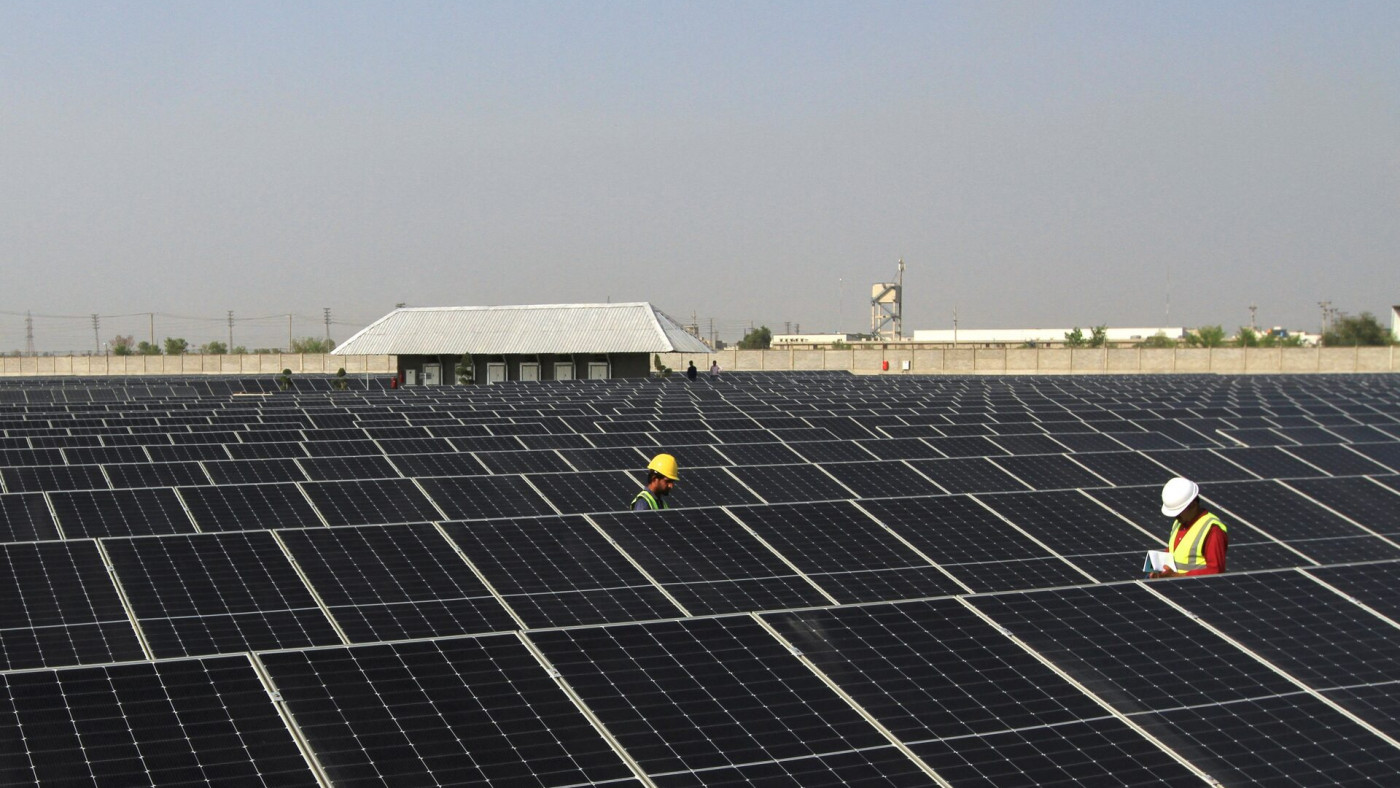 A rooftop solar system is a hedge against inflation, a buffer against geopolitical risk and a pathway to economic resilience. Photo: REUTERS
While the world is losing its mind over oil and gas prices, Pakistan has quietly been building something far more powerful: a solar war chest. Between 2021 and 2025, Pakistan’s solar generation increased by nearly 500%, according to Ember, an energy think tank.
This is not just a statistic; it is a signal of structural transformation. It reflects how a country once crippled by energy shortages and import dependency has begun to rewire its energy system from the ground up.
Crucially, this shift was not driven solely by the state; people led it. The turning point came during the global energy crisis triggered by the Russia–Ukraine war, when soaring LNG prices and unreliable grid supply forced a behavioural shift.
As Nabiya Imran of Renewables First observed, people realised it was far more cost-effective to make a one-time investment in rooftop solar than to continue paying high electricity bills to an unreliable system. What followed was a decentralised, people-led revolution — rooftop by rooftop — across homes, factories and small businesses.
The economic impact has been profound. By February 2026, Pakistan’s solar expansion had helped avoid approximately $12 billion in oil and gas imports. This is not merely an environmental success; it is a macroeconomic breakthrough. Every dollar not spent on imported fuel strengthens foreign exchange reserves, stabilises the currency and reduces fiscal pressure.
While geopolitical tensions, including those involving Iran, still affect fuel prices, a growing share of Pakistan’s population is now insulated from these shocks because their energy no longer depends entirely on volatile global markets.
This experience fundamentally challenges the long-standing assumption that fossil fuels are inherently dependable. Bangladesh has already witnessed the fragility of this model during the LNG price spikes in 2022, which led to load-shedding and costly fuel switching. Today, continued instability in global energy supply chains — from the Middle East to maritime trade routes — reinforces a simple truth: energy security cannot depend on imported fuel.
For Bangladesh, the parallels are striking and the lessons urgent. The country faces rising import bills, pressure on foreign exchange reserves and a power sector burdened by capacity payments for underutilised plants.

Pakistan’s experience demonstrates that true energy security lies not in long-term fuel contracts or centralised generation, but in distributed, domestically generated power.
A rooftop solar system is not just an energy solution; it is a hedge against inflation, a buffer against geopolitical risk and a pathway to economic resilience.
Bangladesh has the structural conditions to replicate this model: a dense population, a growing middle class and an industrial base — especially in the ready-made garments sector — that is highly sensitive to energy costs.
Demand for reliable and affordable electricity is already driving interest in solar, but policy and regulatory barriers still limit its full potential.
The economic argument for solar power is now compelling. Critics often point out that solar power does not generate electricity at night. But this argument overlooks the strategic value of daytime generation.
In Bangladesh, peak electricity demand occurs during daylight hours, particularly in summer because of cooling loads. Solar generation can significantly reduce reliance on costly diesel and furnace oil-based peaking plants during these periods.
More importantly, every unit of solar electricity directly displaces imported fuel, reducing the country’s import bill and easing macroeconomic pressure. Unlike thermal power plants, which lock the country into decades of fuel imports denominated in foreign currency, solar systems have short payback periods — often within five to seven years — and generate electricity at near-zero marginal cost for decades. This insulates users from future price shocks and reduces long-term fiscal burdens.
To unlock this potential, Bangladesh must move beyond pilot projects and adopt a comprehensive, enabling policy framework. Net metering should be expanded and made more attractive, allowing households and businesses to sell excess electricity back to the grid at fair, market-linked rates.
Fiscal barriers must also be removed by eliminating or reducing import duties on solar panels, inverters and battery storage systems, recognising them as essential infrastructure rather than luxury goods.
Access to finance is equally critical. Low-interest green financing can help households and small businesses overcome upfront costs and accelerate adoption. If consumers can finance depreciating assets like vehicles, they should also be able to invest in solar systems that generate long-term savings.
However, Bangladesh must avoid unplanned solar growth without grid readiness, as seen in Pakistan, which can cause voltage instability, reverse power flow and transformer stress. The national grid must evolve to support this transition. Integrating distributed solar requires investments in smart-grid technologies, advanced metering and system flexibility.
While concerns about grid stability, such as voltage fluctuations and reverse power flow, are valid, they are manageable through proper planning and investment.
Bangladesh should also prevent a two-tier electricity system that weakens utility finances by ensuring fair tariff structures and sustainable cost recovery. In fact, a decentralised grid is inherently more resilient because it reduces dependence on a few large generation sources.
The global energy landscape has changed fundamentally. Fossil fuels are no longer the stable foundation; they are volatile, geopolitically sensitive and economically burdensome. Renewables, by contrast, are becoming cheaper, faster to deploy and more secure.
Pakistan’s solar surge is a powerful regional example of what is possible when policy aligns with market demand and public incentives. It shows that even under economic constraints, a rapid transition can be achieved through a combination of necessity, innovation and citizen participation.
The choice for Bangladesh is clear. Continuing along the current path means sustained exposure to global volatility, rising fiscal pressure and increasing economic vulnerability. Embracing decentralised solar offers a pathway to resilience, energy independence and macroeconomic stability.
The sun delivers more energy to Bangladesh in a single day than the country consumes. Harnessing even a fraction of this resource could transform the nation’s energy future.
The lesson from Pakistan is not just about technology; it is about mindset. Energy transitions do not always begin in ministries; sometimes, they begin on rooftops. Bangladesh’s future depends on how quickly it learns the difference.
Md. Mehadi Hasan Shamim is a Research Associate at the Center for Policy Dialogue