


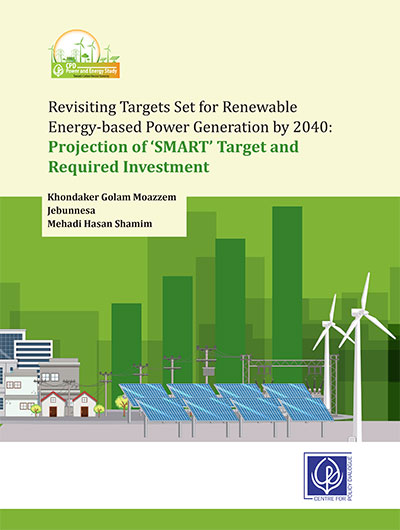
Bangladesh’s power sector is at a crossroads. While national policies envision an ambitious shift towards renewable energy, progress on the ground has remained slow and fragmented. This study provides a timely and evidence-based roadmap to address these challenges by reassessing demand projections and proposing a realistic fuel mix for 2030, 2035, and 2040.
The analysis finds that achieving a 30 per cent renewable energy share by 2040 will require nearly 35,753 MW of new capacity, led by solar and wind, with supporting contributions from hydro, biomass, and biogas. Meeting this goal will demand an estimated USD 35.2–42.6 billion in investment, most of which must be mobilised within the next decade.
Beyond the investment figures, the study stresses the need for policy coherence, legally binding renewable energy targets, fossil fuel phase-out mechanisms, regional energy trade, and expanded access to climate finance. It offers practical recommendations for policymakers, financiers, and development partners, charting a SMART, achievable, and inclusive pathway for Bangladesh’s transition towards a cleaner and more resilient energy future.
Authors: Khondaker Golam Moazzem, Jebunnesa and Mehadi Hasan Shamim
Publication Period: October 2025